On this page
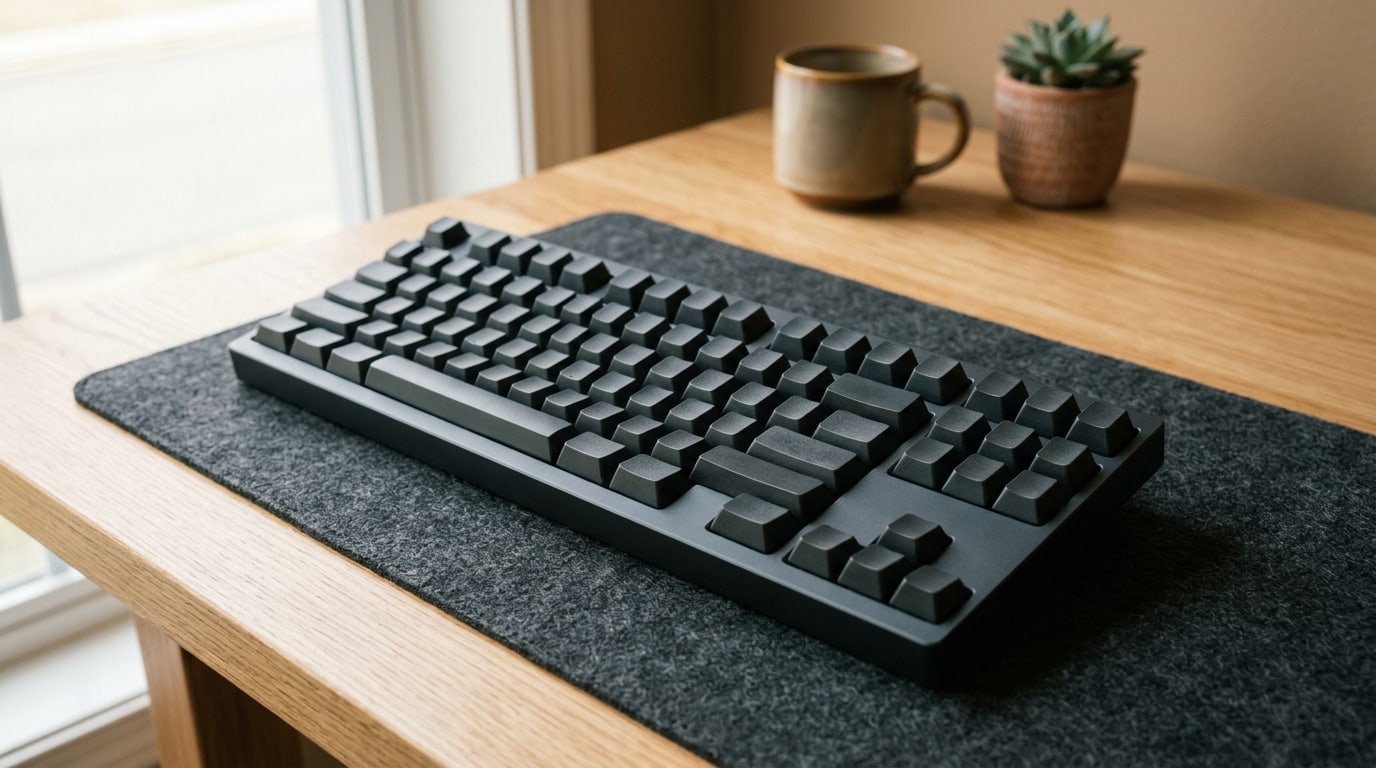
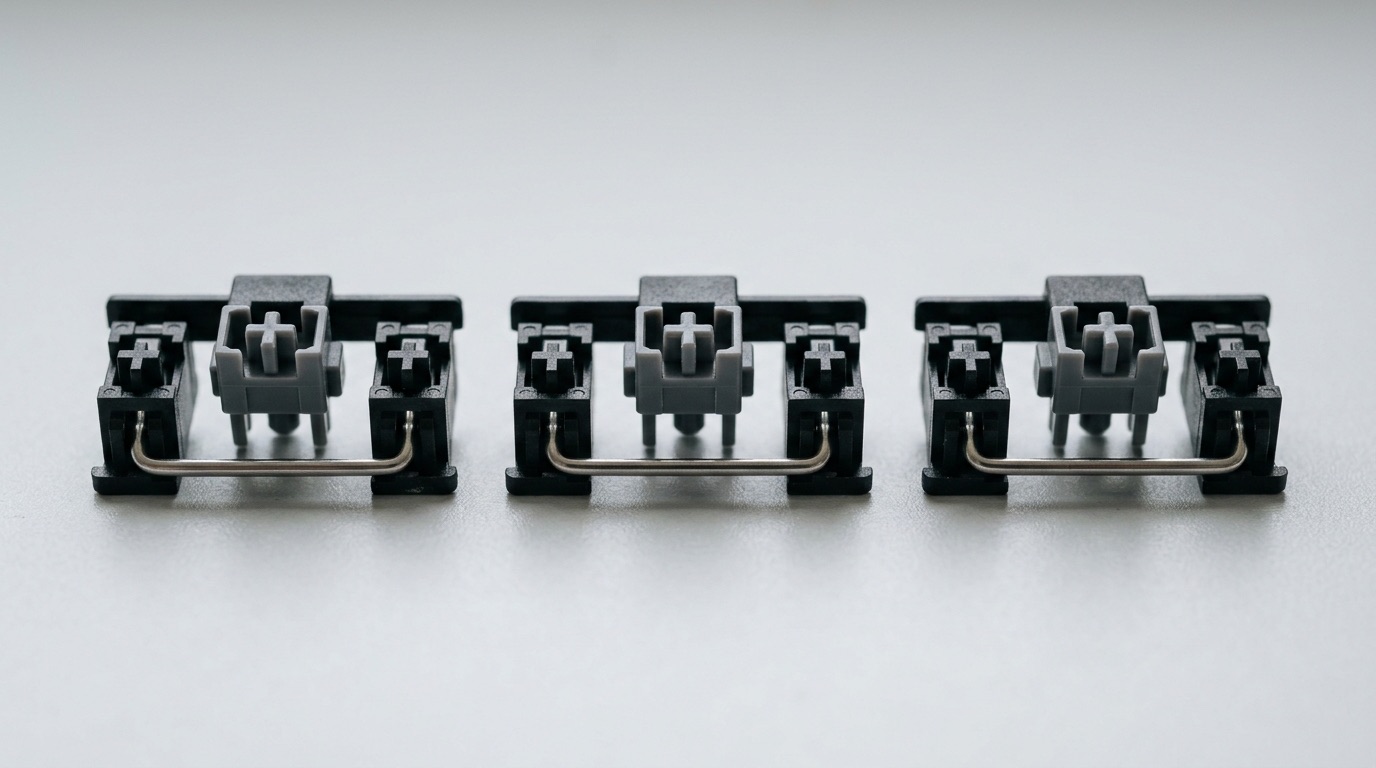
Stabilizers are the unsung heroes of a good-sounding keyboard. They live under every larger key — spacebar, shifts, backspace, enter — and their job is to keep those keys level when you press them off-center. Get them wrong and even a premium build will rattle or tick.
The three mount styles
Most modern keyboards use one of three stabilizer mount styles. The choice is almost always made for you by the keyboard itself, but knowing which is which helps when you swap them out or tune them.
Screw-in
Screw-in stabilizers fasten to the PCB with two tiny screws per stab. They sit perfectly flush against the PCB, almost never loosen, and give the cleanest sound. They also take the longest to install and require a PCB with threaded stab holes. Every screw-in stabilizer we track is listed with its housing material, wire material and size coverage.
Clip-in (snap-in)
Clip-in stabs push into the PCB and click into place. Easier to install, cheaper, and fine for most builds — but prone to tiny amounts of wobble and occasionally rattling because there's always a bit of slop between the clip and the PCB cut-out. See the clip-in stabilizers currently in the database.
Plate-mount
Plate-mount stabilizers attach to the top plate rather than the PCB. Found mostly on older prebuilts. Higher position, more flex under load, harder to lube cleanly. Modern enthusiast keyboards almost never ship with these — the plate-mount sets we do list are mostly replacements for older boards.
How to pick
Beyond mount style, the things that actually make stabs feel better:
- Pre-lubed vs unlubed. Factory-lubed stabs are a huge time saver. Unlubed from Durock or TX ends up smoother if you have the patience.
- Wire quality. Bent or uneven wires tick. Good brands get this right out of the box.
- PCB thickness compatibility. Stabilizers ship in either a 1.2 mm or 1.6 mm version — these are not interchangeable. Check your PCB thickness before ordering. Some premium sets (Durock V3, Wuque WS) include washers that bridge the gap, but most stabs only fit one or the other.
Brand picks
Once you've matched mount style and PCB thickness, the brand decides how much finishing work you'll need to do.
| Brand | Pre-lubed? | Mount | Reputation |
|---|---|---|---|
| Durock V3 | Yes (good factory job) | Screw-in (1.6 mm; with washers also 1.2 mm) | Default enthusiast pick. Smooth, almost always quiet. |
| TX AP | No | Screw-in (1.2 mm or 1.6 mm versions) | Tightest tolerances if you're willing to lube yourself. |
| Staebies V2 | No | Screw-in | Premium boutique option. Excellent wires, fiddly install. |
| Cherry | No | Plate-mount or PCB-mount, depending on version | Stock OEM choice. Lubed properly they're fine, stock they tick. |
| C³ Equalz | Sometimes | Screw-in | Polarising — some love them, some hate the wire fit. |
Avoid generic "GMK clones" and unlabeled stabs from the cheapest end of Aliexpress — even with perfect lubing they'll never be quiet.
Tuning your stabs
Even good stabs benefit from tuning. The three mods you'll see mentioned everywhere:
Band-aid mod
A small fabric or silicone pad placed on the PCB underneath the stem of each stabilized key. When you bottom out, the stem hits the pad instead of the bare PCB, removing the sharp tick. Two band-aids stacked, or pre-cut "stab pads", work equally well. A 2-minute job that makes more difference than a $30 stab upgrade.
Holee mod (clip-fix)
Threading a small piece of fabric or band-aid through the clip on the wire — the clip is where most ticking comes from. Holee mod is finicky on first try, durable forever after. Mostly relevant for older Cherry-style stabs; many premium modern stabs (Durock V3, TX AP) don't need it.
Wire lube ("dielectric grease on the ends")
A dab of dielectric grease (or Krytox 205g0) on the two points where the wire sits in the stab housing. Kills the metallic ping that even otherwise-good stabs sometimes have. Use a toothpick — too much grease attracts grit.
Install workflow
- Match the stab type to the PCB. Screw-in stabs need threaded holes; clip-in stabs need clip cut-outs. Confirm before opening the bag.
- Lube the wires and housing pivots. Even pre-lubed stabs benefit from a tiny extra dab on the wire tips. Use Krytox 205g0 or dielectric grease.
- Install the wire into the housing. Make sure both ends seat fully — a half-seated wire ticks louder than no wire at all.
- Apply band-aid mod to the PCB (optional but recommended). Two strips of fabric band-aid under each stem position.
- Mount the stabs. Screw-in: tighten until snug, never gorilla-tight (PCBs crack). Clip-in: press firmly until both legs click.
- Test before you assemble the rest. Press each stabilized key with one finger off-center — it should travel smoothly with no rattle. Catch problems now, not after the keyboard is built.
Common pitfalls
- Buying stabs that don't match your PCB's mount style.
- Skipping lube on unlubed stabs (they will rattle).
- Over-tightening screws on screw-in stabs (cracks the PCB).
- Forgetting that the 2u shift on ISO layouts needs a stab when it doesn't on ANSI.
FAQ
Why are my stabs ticking? Almost always the wire — either un-lubed contact points in the housing, a wire not fully seated, or stem-on-PCB impact (fixable with band-aid mod). Less commonly: an over-tightened screw-in stab pressing the PCB unevenly.
How much lube do I need? A pin-head dab on each wire tip + a thin film along the wire body. Total per stab: less than the size of a grain of rice. Over-lubing makes stabs feel mushy and quiet but slow.
Are screw-in stabs always better? For sound and long-term stability, yes. For ease and speed, no — clip-in are faster to install and sound nearly as good if the PCB cut-outs are tight.
Can I use 1.2 mm stabs on a 1.6 mm PCB? Not without modification. Either order the right thickness, or buy stabs (Durock V3, Wuque WS) that ship with washers to span both.
Further reading
Once you've picked a mount style, check the shortlist of popular options in our catalog. You can filter by pre-lubed status, PCB thickness range, and compatible sizes.
Happy building.
Our 2026 picks
See all 22 stabilizers in the database
Compare specs, view history, see stats and vendor prices — the tools back you up past this article.
Keep exploring